
Close search
 Published :
/
Published :
/ Posted by : Retech
In the hot and dry desert climate of the United Arab Emirates, poultry farming faces severe challenges. High temperatures can affect the growth rate and survival rate of broiler chickens, and may also cause feed to deteriorate, increasing the cost of farming. As a key part of agricultural development in the Middle East, local farmers are all seeking reliable modern solutions. This article will share a real case: how an agricultural doctor from the United Arab Emirates successfully addressed the issue of high temperatures using Retech's broiler cage system, achieving efficient and sustainable broiler farming.
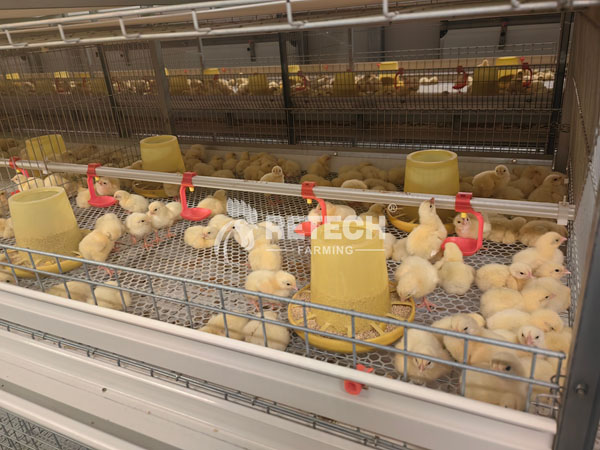
The summer temperatures in the United Arab Emirates often exceed 40°C, combined with high humidity, this extreme weather can affect the following aspects of livestock farming:
These issues have deterred the farmers in the United Arab Emirates. Especially our client, an agricultural doctor renowned in the field of crops. He plans to expand his broiler farming business, but is deeply concerned about the adaptability to the local climate.
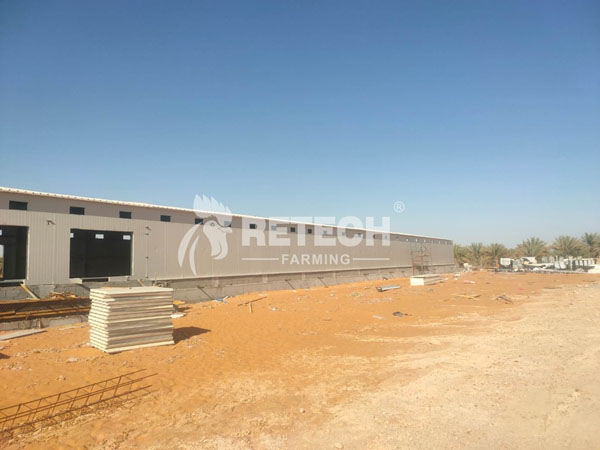
Retech, as a globally leading supplier of poultry farming equipment, offers customers a complete solution. Our equipment is exported to 80+ countries and regions around the world, and we have accumulated rich experience in hot regions. In response to the specific needs of the UAE customers, our steel structure department promptly intervened and provided customized solutions.
The steel structure team of Retech, considering the extreme climate in the United Arab Emirates, selected high-temperature-resistant and corrosion-resistant galvanized steel and aluminum components. These materials undergo special heat treatment, which enables them to withstand temperatures above 50°C without deformation, ensuring the stability and durability of the chicken coop structure. Compared to traditional iron frames, our system has a lower thermal expansion coefficient, reducing the risk of stress cracks caused by high temperatures.
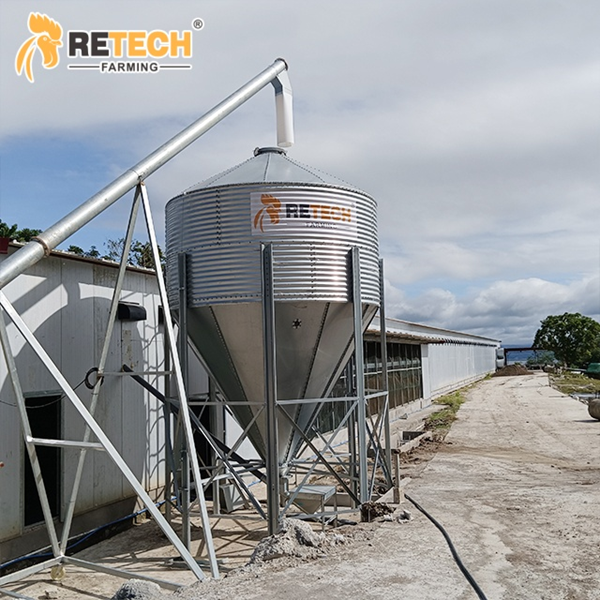
Feed spoilage is the core pain point in high-temperature farming. The large material tower design of Retech incorporates multiple layers of insulation technology, including:
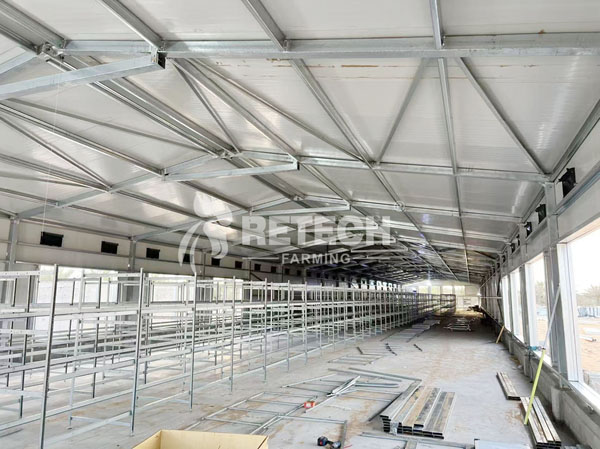
Retech's H-type chicken house with a negative pressure ventilation system and wet curtain walls helps to enhance air circulation, reducing the internal temperature of the chicken coop by 5-8°C. This effectively alleviates heat stress and lowers the mortality rate of the chickens.
These professional suggestions completely dispelled the client's doubts. Eventually, he decided to invest in building 2 modern chicken houses, each capable of accommodating 30,000 chickens, with a total capacity of 60,000 chickens. This not only marks another milestone for Retech in the Middle East market, but also sets a benchmark for the local poultry industry.
Achieving efficient and stable broiler farming in hot climates is not a challenge. By leveraging modern farming equipment, heat-insulating designs for feed towers, and our professional expertise in steel structure and local material selection, you can obtain a feasible, maintainable, and low-risk solution.
If you are evaluating the feasibility of a farm with a total of 60,000 broiler chickens, we can provide you with a comprehensive implementation plan, cost analysis and schedule, to assist you in making a quick decision and achieving production.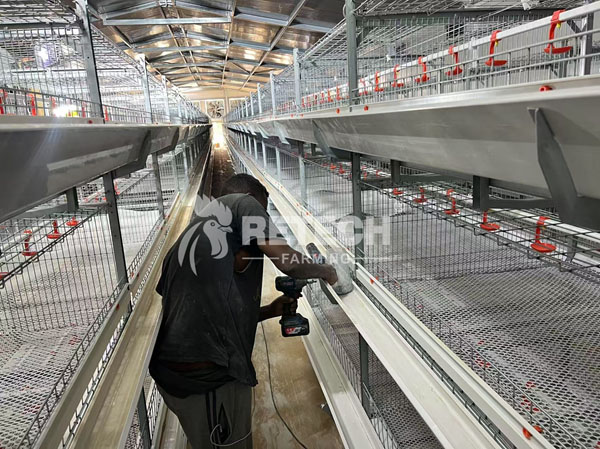
1. How to ensure stable broiler growth in high-temperature regions?
Enclosed chicken houses combined with tunnel ventilation systems, feed tower insulation design, and synergistic cooling with steel structures, along with intelligent temperature control and monitoring, achieve a stable breeding environment.
2. How if feed spoils at high temperatures?
Feed towers employ moisture-proof, mold-proof, and sealing technologies, equipped with temperature and humidity sensors and automatic temperature/humidity control systems to ensure feed freshness and nutritional stability.
3. How long does the construction period usually take?
A solution for two buildings totaling 60,000 chickens is typically completed in phases, provided on-site conditions permit, ensuring controllable quality and schedule. An overseas installation team accompanies the project throughout.
4. How is the return on investment (ROI) assessed?
Through comprehensive cost analysis, energy and feed efficiency improvement, and output stability factors, a cash flow sensitivity analysis is conducted to provide return predictions for various scenarios.
Contact us now!
WhatsApp:+8617685886881
Email:director@retechfarming.com
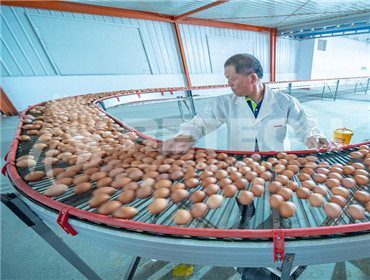
RETECH FARMING makes your chicken raising business much easier and more efficient,modern chicken cage improves your farming profits.
10 tips to ensure that your poultry farm runs smoothly and efficiently while always producing a quality product.
Modern poultry farms battery cage raising chicken in Kenya
Sustainable treatment of manure in large-scale poultry farms in the Philippines: using vertical energy-saving fermentation tanks
How should we build a chicken house?A comfortable and stable chicken coop should consider these 7 factors.
Thinking of using a layer cage system in the Philippines? Learn about the different types, materials, capacity, and how to choose the right chicken farming equipment for your poultry farm. Get expert advice now!





 Back to press release


