
Close search
 Published :
/
 Posted by : Retech
Reporting Period: July–September 2026
Data Sources: Philippine Statistics Authority (PSA), Department of Agriculture (DA) and Official Gazette of the Philippines
The Philippine poultry industry maintained its growth momentum in the third quarter of 2026. According to the Philippine Statistics Authority (PSA), total poultry production reached 823.14 thousand metric tons, up 4.8% year-on-year from 785.10 thousand metric tons in Q3 2025.
Both chicken meat and chicken egg production recorded year-on-year increases, with egg production growing at a significantly faster rate.
Commodity | Q3 2025 | Q3 2026 | Year-on-Year Change |
Total poultry | 785.10 thousand MT | 823.14 thousand MT | 4.8% |
Chicken | 553.65 thousand MT | 573.10 thousand MT | 3.5% |
Chicken eggs | 212.68 thousand MT | 231.56 thousand MT | 8.9% |
Source: Philippine Statistics Authority (PSA). Production figures are preliminary. Chicken production is measured in liveweight, while chicken egg production is measured by product weight.
The data highlights two important developments:
Chicken production continued to expand, contributing significantly to the overall increase in poultry output.
Chicken egg production grew faster than chicken meat production. While chicken output increased by 3.5%, chicken egg production rose by 8.9%, indicating a faster expansion in egg supply during the quarter.
This difference highlights the growing importance of the layer segment in the Philippine poultry industry.
While poultry production increased, farmgate prices for both chicken and chicken eggs declined compared with the same period in 2025.
Commodity | Q3 2026 Average Farmgate Price | Year-on-Year Change |
Chicken | PHP 122.08/kg | -4.8% |
Chicken eggs | PHP 6.78/piece | -6.8% |
This combination of higher production and lower farmgate prices is an important signal for poultry producers.
The figures suggest that increased production has not translated into higher farm-level selling prices. However, lower farmgate prices alone do not establish that the market is experiencing an oversupply. Other factors, including demand conditions, seasonal market movements and distribution dynamics, may also influence producer prices.
For poultry farms, higher production does not necessarily mean higher profitability. Maintaining competitive operating costs will become increasingly important.
Key areas to monitor include feed efficiency, labor expenses, energy consumption, flock management and overall operational efficiency.
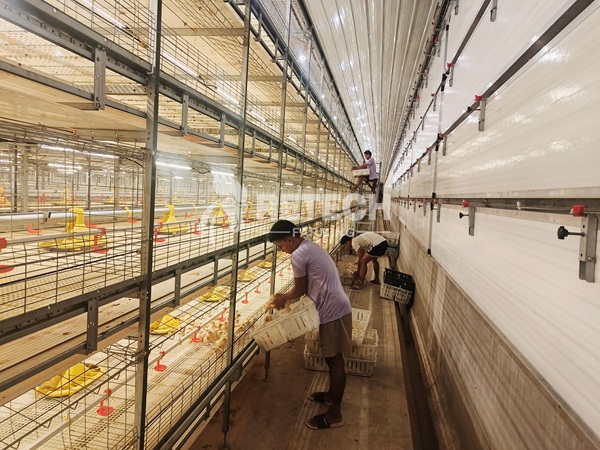
PSA inventory data as of September 30, 2026, provides additional insight into the production base of the Philippine poultry industry.
Category | Inventory as of September 30, 2026 | Year-on-Year Change |
Total chicken inventory | 223.38 million birds | 1% |
Broiler inventory | 78.70 million birds | 4.7% |
Layer inventory | 58.13 million birds | 4.8% |
Total chicken laying flock | 79.28 million birds | 0.2% |
Layer laying flock | 50.92 million birds | 5.7% |
Source: Philippine Statistics Authority (PSA).
The increase in broiler and layer inventories indicates continued development in commercial poultry production.
Of particular interest, the layer laying flock reached 50.92 million birds, increasing by 5.7% year-on-year. This provides further context for the growth in chicken egg production during Q3 2026.
It is important to distinguish between inventory and laying flock figures. Layer inventory refers to the number of birds recorded in the layer category, while the layer laying flock represents birds currently in production. These are different statistical indicators and should not be treated as interchangeable.
The growth in the laying flock also highlights the importance of efficient egg production management as commercial layer operations continue to develop.
PSA data highlights the importance of regional production centers in the Philippine poultry industry.
Central Luzon accounted for 30.6% of national chicken production.
CALABARZON contributed 35.8% of national chicken egg production.
These regions remain key poultry production centers in the Philippines. Their significant contributions to national chicken meat and egg production make them important areas to monitor for future farm development, capacity expansion and poultry equipment investment.
For poultry businesses considering expansion, regional production activity is one factor worth considering alongside local market demand, feed availability, infrastructure and operating costs.
During Q3 2026, the Philippine Department of Agriculture (DA) issued several circulars concerning poultry import restrictions and the management of highly pathogenic avian influenza (HPAI).
Key developments included:
Japan: Department Circular No. 40, issued on August 5 and effective August 28, lifted the temporary import ban on domestic and wild birds, day-old chicks and hatching eggs originating from Japan.
United States: Department Circular No. 41, issued on August 11 and effective September 9, lifted import restrictions on domestic and wild birds and related poultry products from Illinois and Minnesota.
Albania: Department Circular No. 49, issued on September 17 and effective October 10, lifted the temporary import ban on domestic and wild birds and their products originating from Albania.
Hungary: Department Circular No. 52, issued on September 28 and effective October 18, recognized bilateral regionalization arrangements for HPAI, allowing eligible poultry imports from designated recognized zones under agreed conditions.
These measures demonstrate the Philippines' continued use of risk-based and regionalized approaches to managing poultry trade and HPAI-related import restrictions.
It is important to distinguish between the issuance and effective dates of these circulars. While all four measures were issued during Q3, the Albania and Hungary measures took effect in October 2026.
For local poultry producers, continued monitoring of disease-related trade policies, farm biosecurity requirements and the availability of imported breeding materials remains important.
Feed costs remain a major factor affecting poultry farm profitability. Corn is an important ingredient in poultry feed, making domestic corn supply and import policy particularly relevant to the industry.
On October 26, 2026, the Philippine government issued Executive Order No. 129, increasing the 2026 Minimum Access Volume (MAV) for corn imports from 220,000 metric tons to 500,000 metric tons, an additional allocation of 280,000 metric tons.
The government cited a projected yellow corn supply deficit of approximately 1.422 million metric tons from March to December 2026, driven by domestic production constraints and rising input costs.
The additional import allocation is intended to supplement domestic corn supply, support feed production and help stabilize feed prices.
Although this policy was introduced after Q3, it is an important development for poultry producers heading into the final quarter of 2026.
Its actual impact will depend on implementation, import availability and domestic market prices.
The Q3 2026 data reveals three important developments in the Philippine poultry industry: expanding production, faster growth in egg output and declining farmgate prices.
These trends highlight the importance of improving farm efficiency and managing production costs.
With chicken egg production increasing by 8.9% year-on-year, layer farms should pay close attention to flock management, egg collection efficiency, egg quality and daily production performance.
Efficient equipment and well-planned production processes can help farms maintain consistent operations as production scales up.
Declining farmgate prices put greater pressure on producers to manage feed consumption, labor expenses, energy use and equipment maintenance.
Reducing unnecessary operating expenses is essential for maintaining profitability in a competitive market.
As farms expand, automated feeding, drinking, egg collection and manure removal systems can help reduce repetitive manual work and improve operational consistency.
For larger layer operations, automation can also make daily farm management more organized and efficient.
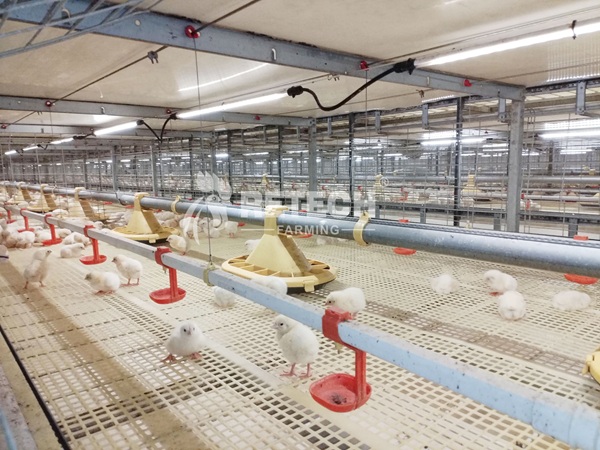
Proper ventilation, temperature control and air circulation are essential for maintaining suitable poultry house conditions, particularly in large-scale, multi-tier layer operations.
Environmental control should be considered as part of the overall farm design rather than treated as an independent equipment choice.
Farm expansion decisions should consider more than initial construction and equipment costs.
Producers should also evaluate labor requirements, energy consumption, maintenance, production efficiency and the expected operating life of the equipment.
Before expanding an existing farm or building a new one, assessing the available space, infrastructure and production targets can help determine the most suitable investment plan.

As the Philippine poultry industry continues to expand, improving operational efficiency and managing production costs are becoming increasingly important for poultry producers.
LIVESTOCK PHILIPPINES 2026
ILDEX Philippines 2026
AGRILINK/FOODLINK/AQUALINK 2026

RETECH Farming provides integrated poultry farming solutions for layer and broiler projects, including automated feeding, drinking, egg collection, manure removal, ventilation and environmental control systems.
Beyond equipment supply, RETECH supports customers with poultry house planning, equipment configuration and integrated farm solutions based on project scale, building conditions and production requirements.
Whether upgrading an existing poultry farm or developing a new project, RETECH aims to help producers build efficient, reliable and scalable poultry farming operations.
Upgrading 730k birds traditional broiler houses in Nueva Ecija to automated multi-tier chain cage systems;
New 80k birds automated cage equipment broiler farm;
110 cubic meter energy-saving fermenter, solving the problem of chicken manure accumulation;
Contact RETECH Farming
WhatsApp: +86 185 6181 8850
Email: admin@retechfarming.com
Website: www.retechfarming.com
Philippine Statistics Authority (PSA) – Volume of Production of Agriculture and Fisheries, July to September 2026.
Philippine Statistics Authority (PSA) – Q3 2026 Livestock and Poultry Statistics.
Department of Agriculture (DA) – 2026 Department Circulars, including Circular Nos. 40, 41, 49 and 52.
Official Gazette of the Philippines – Executive Order No. 129, Series of 2026.
Data Note: Q3 2026 production and inventory figures are preliminary statistics released by the Philippine Statistics Authority (PSA) on November 6, 2026. Farmgate prices refer to producer-level prices, not retail prices. Production and inventory figures represent different statistical indicators. Policy measures issued after September 30, 2026, are identified separately as post-quarter developments and should not be interpreted as causes of Q3 production or price movements.

Offering project design, quality control, installation, after-sale service and farming guidance etc.

Technical training and full customer support to ensure our clients can get efficient farming experience.

The company builds a professional product testing laboratory, only to design more professional poultry equipment that is more suitable for farmers

The Philippine poultry farming industry is booming in the first quarter of 2026. Choose Retech's modern farming equipment to help your farm enhance its core competitiveness.


Professional poultry house design to meet your raising quantity and personalized requirements.





 Back to press release


