
Close search
 Published :
/
Published :
/ Posted by : Retech
When you enter your own chicken coop, do you notice a strong ammonia smell and the chickens struggling to breathe? Poor air quality directly affects the health, growth rate and output of the chicken flock. By helping managers create a more comfortable chicken coop environment, reducing ammonia peaks and ensuring the chickens are healthier.
1. Maintain good air circulation and uniformity within the chicken house to prevent the chickens from overheating or getting too cold.
2. For meat chicken farms, adequate and clean feed and water are also important after ventilation.
3. Appropriate ventilation and regular farm cleaning and maintenance will reduce ammonia peaks, such as in this farm.
4. Selection of ventilation system: climate adaptability.
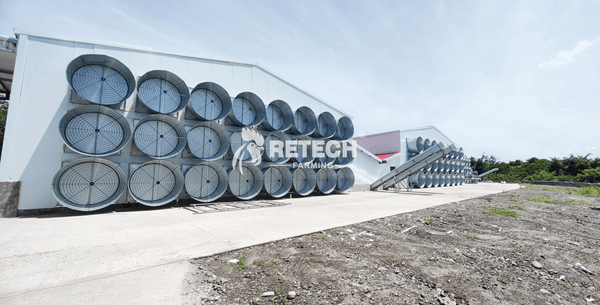
The commonly used ventilation systems for meat chicken houses include natural ventilation and mechanical ventilation (fans).
Utilize the wind pressure and thermal pressure from nature to drive the air circulation within the house. Usually, it relies on the structural design of the chicken house, such as ridge ventilators, side wall ventilation windows, etc. The advantage is low cost, but it is easily affected by local climate and may not meet the needs of the chickens.
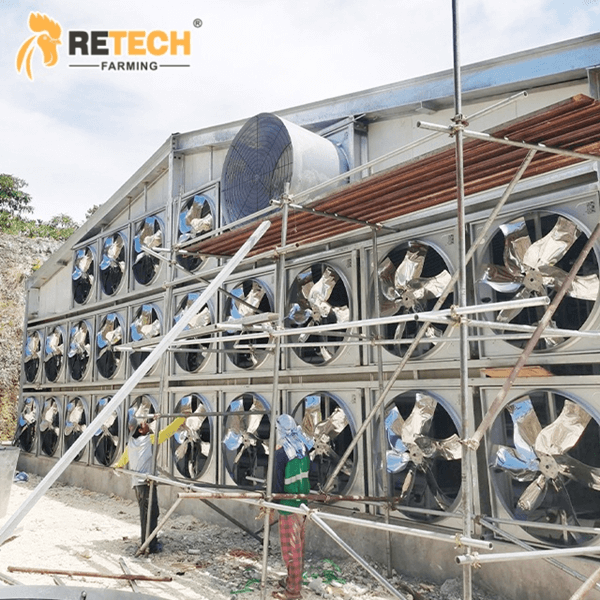
Mainly relies on fans to forcibly drive the air circulation to meet the ventilation needs at different times. It mainly consists of fans, wet curtains, and intake ports. The advantage is that it can provide reliable ventilation volume regardless of the weather outside, meeting the needs of chickens at different growth stages and densities.
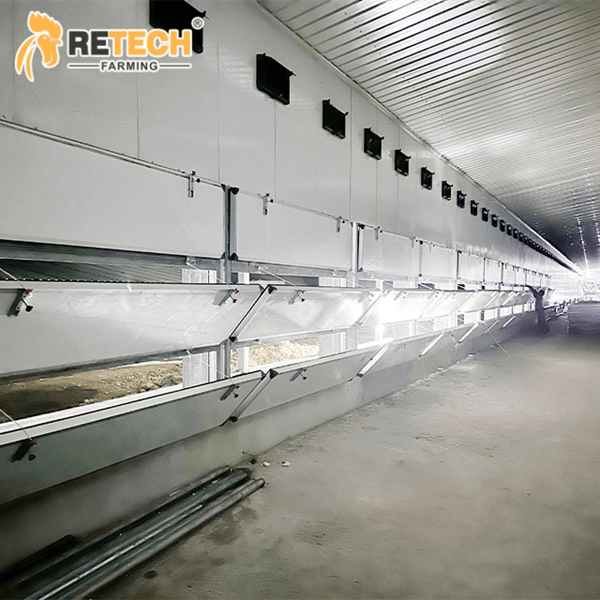
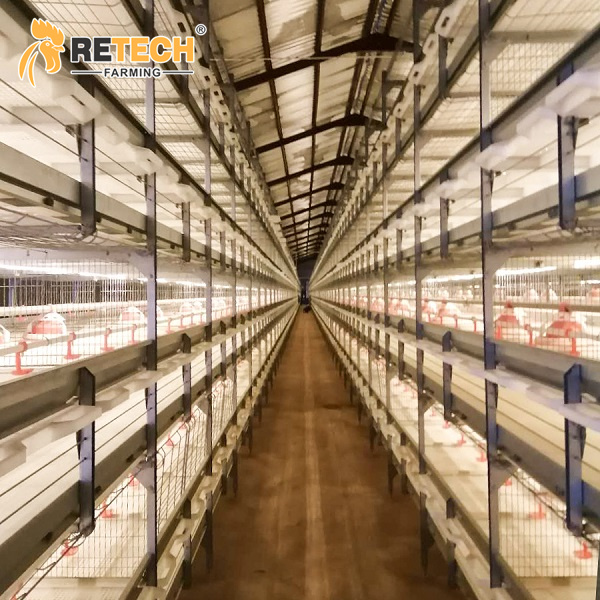
Recommend using a tunnel ventilation system, which simulates the tunnel effect, forming a high-speed airflow through the front and rear intake ports, quickly removing hot air and pollutants. This system is particularly suitable for hot regions and can effectively control the temperature inside the chicken house.
If you are looking for a reliable broiler farm project solution provider, we can offer full-process services from project design to installation.
1. Adjust the air speed according to the age of the chickens, and regulate the temperature inside the chicken coop. Consider the air speed, humidity and cooling effect.
2. Avoid blowing directly on the chicks. The air outlet should not face the chicks directly. Use baffles to guide the air into the chicken coop.
3. Pay attention to observing the reactions of the flock.
Gathered together: Birds are cold - reduce air flow or raise the temperature.
Uniformly dispersed: Comfortable.
Gasping or spreading wings: Overheated, increase air flow.
4. Use sensors and control devices.
Use temperature sensors to monitor the temperature inside the chicken coop in real time. It is simple to operate and easy for managers to observe.
5. Avoid excessive ventilation at night.
In hot weather, the temperature usually drops at night. Reduce air flow when it is cooler to prevent the temperature inside the chicken coop from being too low.
The chickens grow comfortably and the managers are happier.
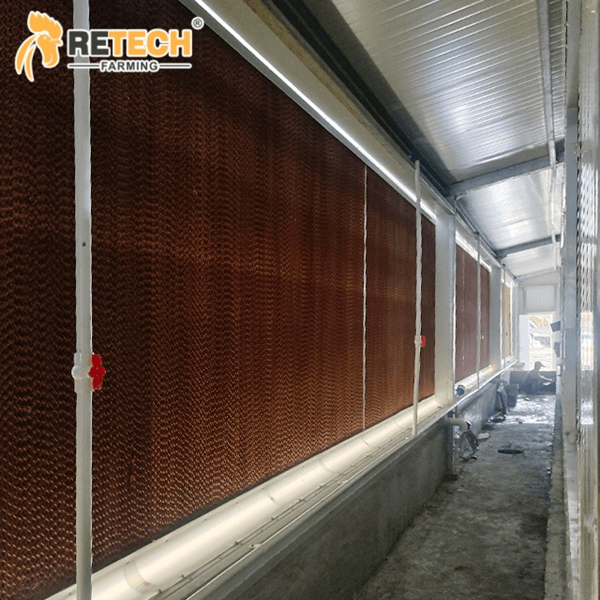
If the ventilation system breaks down, it is a disaster for the managers. The air quality depends on the normal operation of the ventilation system.
Regular cleaning: Clean the air vents and fans every week to prevent blockages that could affect the evenness of air circulation.
System inspection: Test the accuracy of sensors monthly to ensure reliable temperature sensor data.
Integrated management: Combine ventilation with the uniformity of feed and water supply. For example, install automatic water dispensers to avoid water contamination.
In the Philippines, Russia, Kenya or other African countries, the locations for chicken farming vary, and the ventilation requirements for chicken houses also differ. Customized solutions are needed. The professional team of Retech can help you address the impacts of high temperatures and high humidity on poultry farming, reduce waste in production capacity, and increase your farming profits!
FAQ
Q1. How to assess the appropriate airflow and fan capacity for my broiler house?
Retech provides customized design solutions. We will provide preliminary airflow range and fan model recommendations based on your local climate, broiler house area, ceiling height, farming scale, and farming stage (brooding, rearing, and late-stage).
Q2. How to maintain the ventilation system to ensure long-term effectiveness?
Regular maintenance is key to avoid blockages that affect ammonia emissions from the broiler house. For natural ventilation, clean openings and mesh covers monthly and check for structural integrity; for mechanical ventilation, clean fan blades and filters quarterly, lubricate the motor, and test the wind speed.
Q3. How to ensure emergency operation of the ventilation system during a sudden power outage?
· Backup power: Diesel generator recommended;
· Manual ventilation windows: Reserve quick-opening windows.
Q4. How to adjust the ventilation system in winter?
In winter, the key is to balance insulation and ventilation; the most effective solution is to use a negative pressure ventilation system.
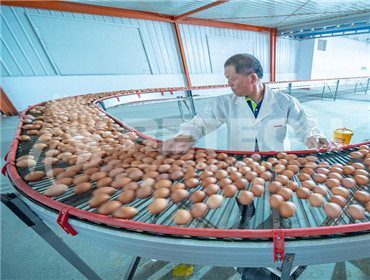
RETECH FARMING makes your chicken raising business much easier and more efficient,modern chicken cage improves your farming profits.

10 tips to ensure that your poultry farm runs smoothly and efficiently while always producing a quality product.
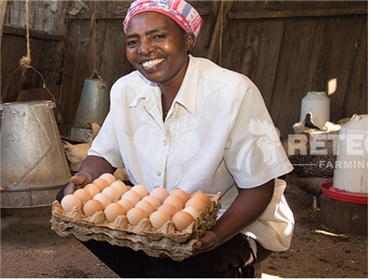
Modern poultry farms battery cage raising chicken in Kenya
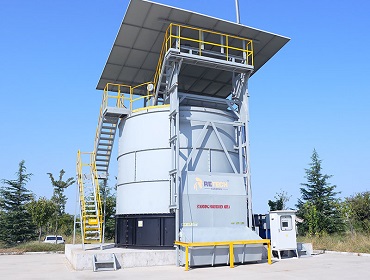
Sustainable treatment of manure in large-scale poultry farms in the Philippines: using vertical energy-saving fermentation tanks
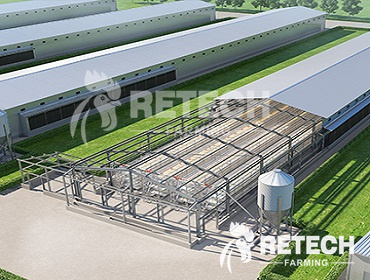
How should we build a chicken house?A comfortable and stable chicken coop should consider these 7 factors.
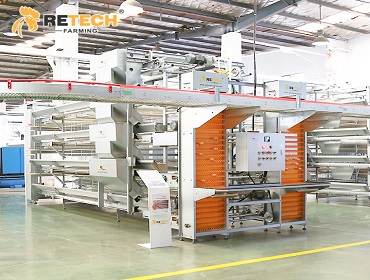
Thinking of using a layer cage system in the Philippines? Learn about the different types, materials, capacity, and how to choose the right chicken farming equipment for your poultry farm. Get expert advice now!





 Back to press release


