
Close search
 Published :
/
Published :
/ Posted by : Retech
Broiler farming may seem simple, but in reality, every step can affect the survival rate, feed-to-meat ratio, and final profit. To improve the efficiency of chicken farming, one cannot only focus on the final weight gain; instead, they must start from the arrival of the chicks, and carry out full-process management including chick rearing, feeding, environmental control, and disease prevention.
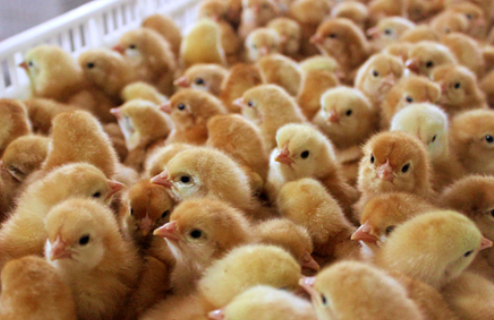
The following are the core management points for the entire life cycle of broiler chicken farming:
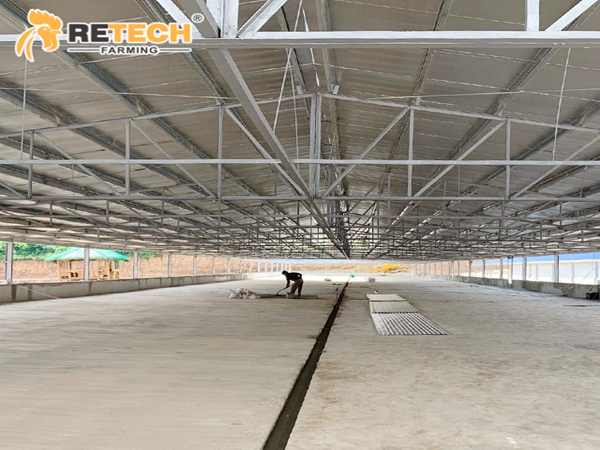
The first step in raising meat chickens is not the arrival of the chicks themselves, but the preparation of the chicken houses and the meat chicken breeding equipment. The adequacy of the preparations before the chicks' arrival directly affects the subsequent chick-rearing results.
Before introducing chickens, the chicken coop should be thoroughly cleaned, including removing bedding, feces, dust and leftover feed, and conducting thorough disinfection of the floor, walls, water supply system, feed lines and equipment.
After disinfection, sufficient emptying time should be provided to reduce the risk of residual pathogens.
The water supply system, ventilation system, heating equipment, lighting system, feed line equipment, etc. should all be pre-adjusted to ensure stable operation of the chicks after they arrive.
If it is a large-scale breeding, it is recommended to conduct a comprehensive equipment inspection before introducing the chicks to avoid affecting the chicks' adaptation due to equipment failures.
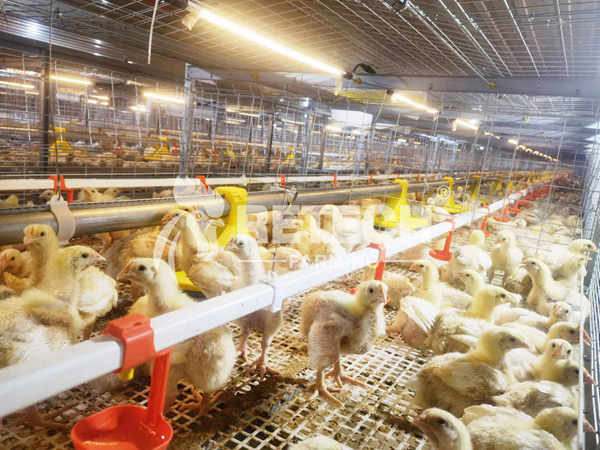
Chickens are extremely sensitive to temperature. Before the chicks arrive, the temperature inside the house must be raised in advance to meet the requirements for chick rearing.
Generally, based on the local climate and the age of the chicks, the temperature distribution in the house should be adjusted in advance to avoid situations where cold air blows directly and where the temperature difference is too large.
The quality of chicken chicks and the transportation process directly affect the basic health level of the entire batch of broilers.
The transportation time for chicken chicks should not be too long. During the journey, they should be prevented from being exposed to extreme cold, heat, overcrowding, or lack of oxygen.
After arrival, the chicks should be unloaded and sorted as soon as possible to minimize the stress time.
After the chicks are brought into the house, the first thing to do is to make them drink water as soon as possible, followed by feeding.
Drinking water can help the chicks recover their strength, alleviate transportation stress, and stimulate the intestines to function.
The feeding should be carried out evenly to ensure that each chick can get the feed within the shortest time.
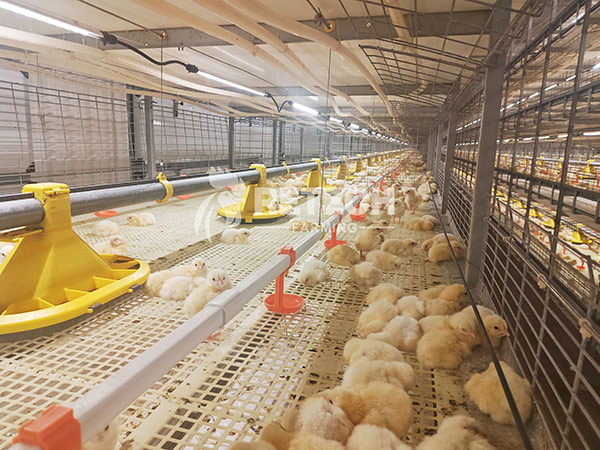
As the growth rate of broilers accelerates and metabolic products increase, the difficulty of environmental control also increases.
The management before sale directly determines the final profit margin.
1.Observe the uniformity of the livestock being sold.
If there are significant weight differences among the chickens, they should be sold off in batches.
2. Control the stress before slaughter
Before slaughter, unnecessary disturbances should be minimized. The timing of reducing feed, catching the chickens, and loading should be properly arranged to reduce transportation losses.
Especially in hot weather conditions, it is even more important to pay attention to the shipping schedule and ventilation conditions.
3. Keep good records of the livestock being sold.
Completely record the survival rate, average weight, feed-to-meat ratio, causes of death and drug usage for each batch, which will be helpful for subsequent review and optimization.
Data-based management is an important foundation for improving the efficiency of broiler chicken farming.
The core of broiler chicken farming technology does not lie in any single step, but rather in the systematic management from the arrival of chicks to their sale.
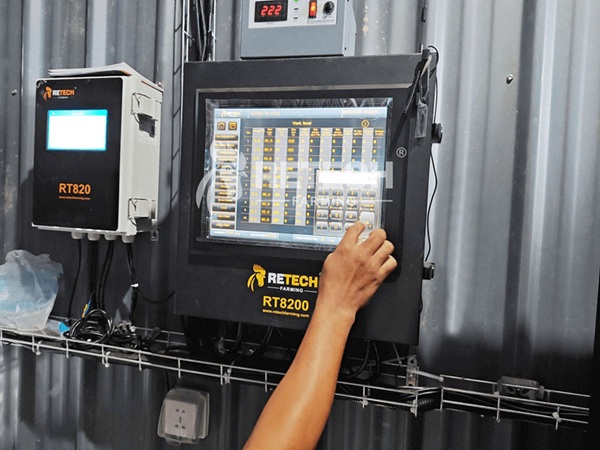
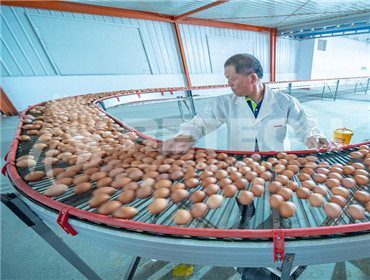
RETECH FARMING makes your chicken raising business much easier and more efficient,modern chicken cage improves your farming profits.
10 tips to ensure that your poultry farm runs smoothly and efficiently while always producing a quality product.
Modern poultry farms battery cage raising chicken in Kenya
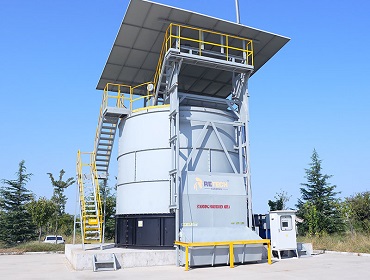
Sustainable treatment of manure in large-scale poultry farms in the Philippines: using vertical energy-saving fermentation tanks
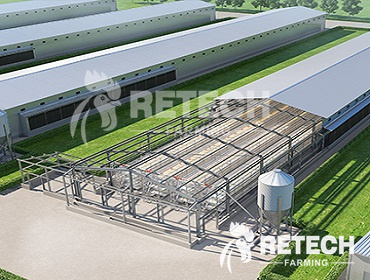
How should we build a chicken house?A comfortable and stable chicken coop should consider these 7 factors.
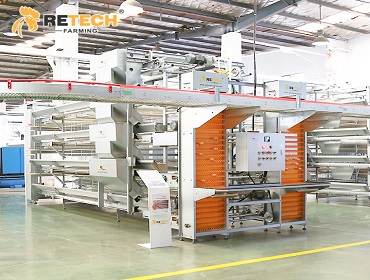
Thinking of using a layer cage system in the Philippines? Learn about the different types, materials, capacity, and how to choose the right chicken farming equipment for your poultry farm. Get expert advice now!





 Back to press release


