In poultry farming, the design of the ventilation system not only needs to consider the performance and layout of the equipment, but also must formulate corresponding ventilation strategies based on the changes in climate during different seasons. Climate conditions vary significantly in different countries and regions, so understanding how to adjust the ventilation strategies in hot summer and cold winter environments is crucial for improving the growth efficiency and health level of poultry. This article will explore the ventilation needs and strategies for different seasons in different countries (such as the Philippines, Kenya, and Russia).
I. Core Strategies of Seasonal Ventilation
Efficient seasonal ventilation is not a fixed process; it needs to be adjusted according to changes in the external environment.
1. Summer high-temperature strategy: Cooling and heat removal
Summer is the peak season for heat stress in poultry, especially for broilers and laying hens. High temperatures can lead to decreased feed intake, reduced egg production, weakened immunity, and even death.
- Objective: To quickly remove heat from the poultry house, introduce cool air, and lower the temperature inside the house.
- Key technologies:
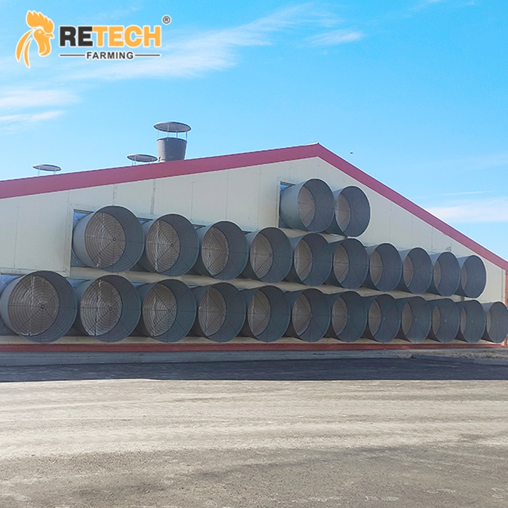
- Tunnel Ventilation (Tunnel Ventilation): Use large volume fans, install wet curtains at one end of the house, and fans at the other end. This creates a straight airflow from the wet curtains to the fans. The airflow speed can reach 2-3 meters per second, effectively removing heat from the chickens' bodies, while the wet curtains evaporate and cool the air. This is the most effective cooling method in high-temperature areas.
- Evaporative Cooling Pads (Evaporative Cooling Pads): Utilize the principle of water evaporation to remove heat from the air. The wet curtains are combined with tunnel fans, which can lower the house temperature by 5-10°C, while increasing air humidity.
- Maximum Ventilation Capacity: Ensure that the fans can provide the ability to replace the entire house's air 60-90 times per hour.
- Fine Management: During hot weather, it may be necessary to operate some or all of the fans continuously for 24 hours, and adjust the opening duration and water volume of the wet curtains according to the temperature difference and humidity changes during the day and night.
2. Winter Cold Strategy: Balancing Insulation and Ventilation
The challenge in winter lies in how to maintain an appropriate temperature while removing harmful gases and replenishing oxygen, and avoiding direct cold air exposure to the chickens.
- Objective: Maintain a constant and suitable temperature inside the coop, provide minimal fresh air, and remove ammonia, carbon dioxide, and moisture.
- Key Technologies:
- Minimum Ventilation (Minimum Ventilation): Use timed, low-speed exhaust fans, combined with high-position intake vents on the top or side walls. Cold air enters and first rises to mix with the heat in the coop, then slowly descends to the chicken area to avoid direct cold air exposure.
- Air Mixing and Circulation: Use appropriate circulating fans to ensure uniform temperature inside the coop and reduce dead zones and accumulation of harmful gases.
- Heating System Integration: The ventilation system must work in coordination with the heating system (such as hot air furnaces, underfloor heating). Precise control of the temperature inside the coop is necessary.
- Negative Pressure Control: Maintain a slight negative pressure to ensure that air enters through the preset vents and prevents cold air from invading through gaps from outside.
- Humidity Control: The minimum ventilation volume should also be sufficient to remove the water vapor exhaled by the chickens and the water vapor evaporated from manure, preventing the litter from becoming too wet.
3. Transition Season Strategy: Flexibility and Adaptability
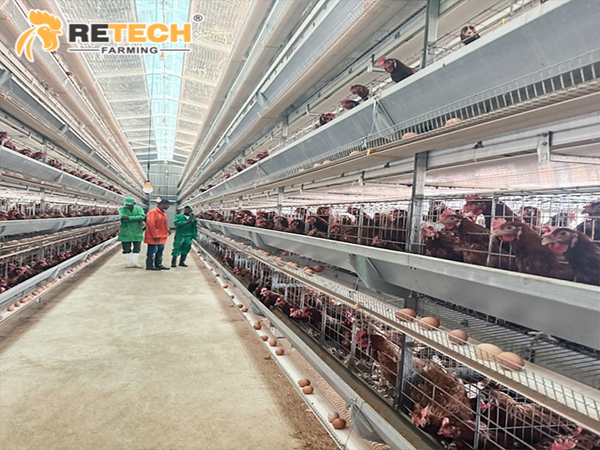
The characteristics of the transition season are large temperature differences between day and night and frequent weather changes, which require the ventilation system to have high flexibility.
- Objective: To smoothly transition between minimum ventilation and tunnel ventilation based on real-time temperature changes.
- Key Technologies:
- Variable-speed fans and multi-stage fans: By adjusting the fan speed or activating different numbers of fans in stages, the ventilation volume can be linearly regulated.
- Zone control: Adjust the local ventilation volume according to the temperature differences in different areas of the chicken house.
- Intelligent controller: Automatically monitor temperature and humidity, and intelligently switch ventilation modes based on preset programs to achieve a smooth transition and avoid stress on the chicken flock.
II. Global Perspective: Ventilation Requirements Adapted to Local Climate
Different geographical locations and climatic conditions present distinct requirements for ventilation systems. As a modern producer of poultry equipment, we conduct in-depth research on the global market and offer customized solutions.
1. Philippines: Challenges of high temperature and humidity in a tropical marine climate
1.1 Environmental characteristics: Year-round high temperatures and high humidity, with an average temperature of 25-32°C and humidity consistently above 80%.
1.2 Ventilation requirements: Extreme emphasis on continuous and efficient cooling and dehumidification capabilities.
- Core: A powerful tunnel ventilation system combined with high-quality wet curtains is an essential standard configuration.
- Corrosion resistance: The humid environment places extremely high demands on the corrosion resistance of equipment (especially fan blades, motor housings, and controllers), requiring the use of special materials and protection grades.
- Energy efficiency: Since the system needs to operate for a long time, the energy efficiency ratio of the equipment is of crucial importance.
2. Kenya: Diverse climates combining highlands and coastlines
2.1 Environmental characteristics: Kenya has a diverse climate, with the coastal areas being hot and humid, while the inland highland regions are cooler. There is a large temperature difference between day and night, and some areas may face challenges with unstable electricity supply.
2.2 Ventilation requirements: Emphasize the adaptability, reliability, and independence of the system.
- Coastal areas: Similar to the Philippines, they require strong cooling and dehumidification capabilities.
- Highland areas: Balance summer cooling and winter insulation (although winters are not extremely cold), and have high requirements for flexible adjustment during transitional seasons.
- Reliability: Equipment must be durable, easy to maintain, adaptable to potentially unstable power supply, and backup power solutions (such as generators) become important considerations.
- Customization: It is necessary to conduct detailed environmental assessments and system designs based on the specific geographical location and altitude of each livestock farm.
3. Russia: Contrast between Extreme Cold Winter and Cool Summer
3.1 Environmental Characteristics: Harsh winter with temperatures reaching -30°C or lower, and a relatively cool summer, but short-term high temperatures can still occur.
3.2 Ventilation Requirements: Extremely demanding - emphasis on insulation performance in winter, precise minimum ventilation, and efficient heating integration.
- Core: The insulation and heat retention performance of the chicken coop is the primary prerequisite. The efficient heating system is closely integrated with the ventilation system to minimize heat loss.
- Winter: Precisely controlled minimum ventilation system, through roof intake or high-position side wall intake, to ensure the full mixture of fresh air and avoid direct cold wind. Fans need to operate stably at extremely low temperatures.
- Summer: Although not as hot as tropical regions, it still needs to be equipped with sufficient tunnel ventilation capacity to cope with occasional high temperatures.
- Energy Consumption Control: The heating energy consumption in winter is huge, so the energy efficiency of the ventilation system and the coordinated optimization with the heating system are of crucial importance.
III. Smart Control System: The Weapon for Mastering Global Complex Climates
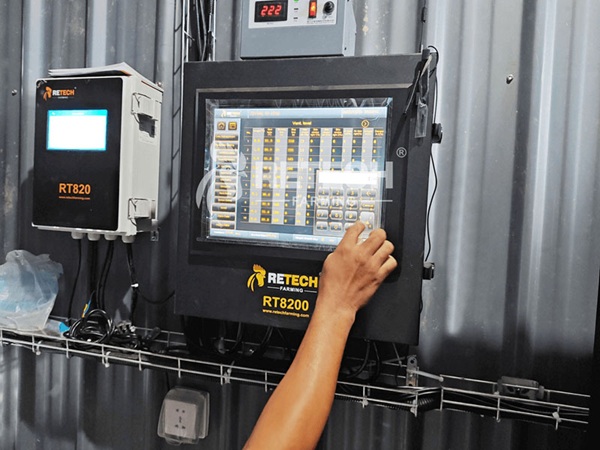
No matter in which climate zone, an intelligent control system is the key "brain" for implementing the aforementioned strategies. It can monitor the environmental parameters (temperature, humidity, ammonia, carbon dioxide, etc.) inside and outside the chicken coop in real time, and based on preset programs and algorithms, automatically adjust the start and stop of fans, the opening and closing of wet curtains, and even link with the heating system to ensure that the environment inside the chicken coop is always at its best. This automated and refined management significantly reduces labor costs and management difficulties, and also enhances the response speed in dealing with sudden climate changes.
IV. Conclusion: Select an intelligent, efficient and adaptable ventilation system
To address the diverse climate challenges worldwide, poultry farms need a ventilation system that is not only scientifically designed and equipped with advanced technology, but also capable of flexibly adapting to seasonal and regional characteristics.
As a well-experienced and technologically advanced
modern chicken farming equipment factory in China, we not only provide high-quality ventilation equipment, but also excel at providing customized ventilation solutions and professional engineering guidance based on the specific needs of customers and the climatic characteristics of the location. We are committed to helping global farmers create the most ideal growth environment for poultry in any environment, achieving sustainable profit growth.
Email:director@retechfarming.com
WhatsApp:+8617685886881

 Published :
/
Published :
/ Posted by : Retech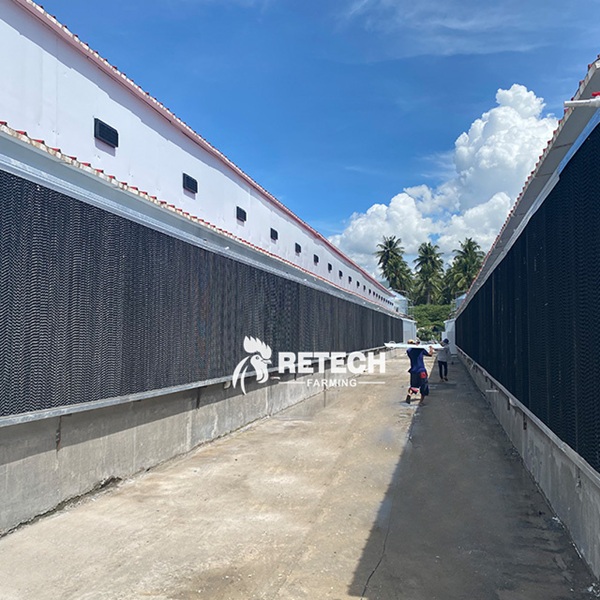






 Back to press release


